
Landscaping Business Licenses Guide by State
Whether you’re starting a new landscaping business or expanding into another state, use this directory to stay compliant and grow your business confidently.
Why landscaping licenses matter
Every state has its own rules for landscaping contractors. Some require a license for any construction, irrigation, or hardscaping work, while others only regulate specific services. This guide helps you quickly find your state’s landscaping license requirements, fees, and official application links — all in one place.

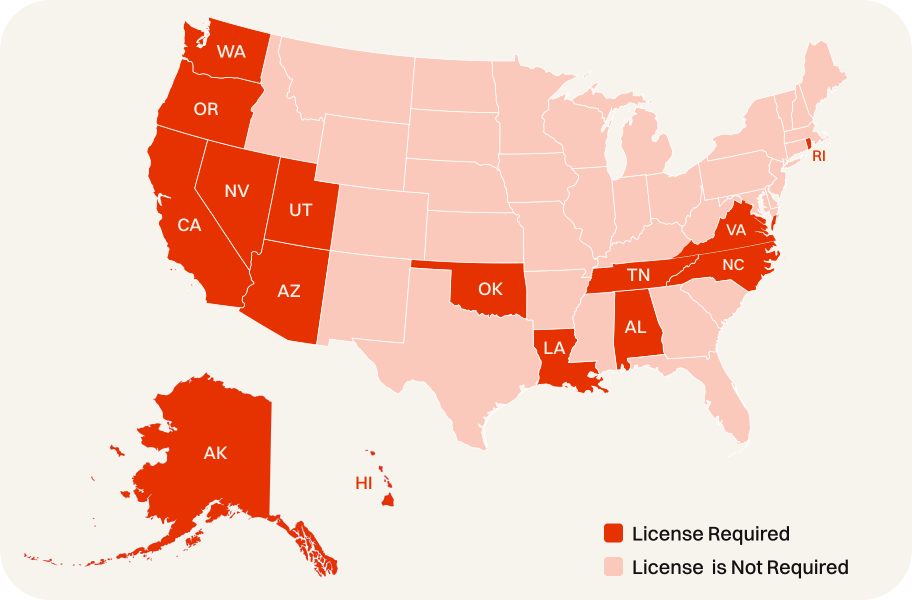
Landscaping license requirements
for every state
| State | License Required? | Typical Cost |
|---|---|---|
| Alabama | Yes | $300  |
| Alaska | Yes | $400 |
| Arizona | Yes | $910 |
| Arkansas | Yes | $150-$450 |
| California | Yes | $725 |
| Colorado | No | $50 |
| Connecticut | No | $120 |
| Delaware | No | $110 |
| Florida | No | $125 |
| Georgia | No | $150 |
| Hawaii | Yes | $1000 |
| Idaho | No | — |
| Illinois | No | — |
| Indiana | No | — |
| Iowa | No | — |
| Kansas | No | — |
| Kentucky | No | — |
| Louisiana | Yes | $1214 |
| Maine | No | — |
| Maryland | No | — |
| Massachusetts | No | — |
| Michigan | No | — |
| Minnesota | No | — |
| Mississippi | No | — |
| Missouri | No | — |
| Montana | No | — |
| Nebraska | No | — |
| Nevada | Yes | $1340 |
| New Hampshire | No | — |
| New Jersey | No | — |
| New Mexico | No | — |
| New York | No | — |
| North Carolina | Yes | $425 |
| North Dakota | No | — |
| Ohio | No | — |
| Oklahoma | Yes | $425 |
| Oregon | Yes | $1040 |
| Pennsylvania | No | — |
| Rhode Island | Yes | $150 |
| South Carolina | No | — |
| South Dakota | No | — |
| Tennessee | Yes | $307 |
| Texas | No | — |
| Utah | Yes | $606 |
| Vermont | No | — |
| Virginia | Yes | $624 |
| Washington | Yes | $191 |
| West Virginia | No | — |
| Wisconsin | No | — |
| Wyoming | No | — |

License requirements, costs, and regulations vary by state and type of landscaping work. This table is for general guidance only. Always confirm the latest requirements with your state’s licensing board or contractor authority before starting any project.

Try Duranta for Free
 Any questions
Do all states require a landscaping license?
No. Some states require a landscaping or contractor license for any construction, irrigation, or hardscaping work, while others only regulate specific services like pesticide application or irrigation installation.
What kind of work requires a landscaping license?
Licensing is usually required for work that involves construction, grading, irrigation systems, drainage, or pesticide use. Basic lawn care or maintenance often doesn’t need a license, but this varies by state.
How do I get a landscaping license?
The process typically includes registering your business, getting a contractor bond and insurance, completing an application with your state’s licensing board, and paying a licensing fee. Some states also require exams or background checks.
How much does it cost to get a landscaping license?
Costs vary by state but usually range from $50 to $300 for initial registration, plus bond and insurance requirements. Renewal fees are often due annually or every two years.
How long does it take to get licensed?
Most landscaping licenses are approved within two to six weeks once your application, bond, and insurance are complete. Processing times can be longer during peak seasons.
What’s the difference between a landscaping contractor and a landscape architect license?
A landscaping contractor license allows you to perform construction and installation work, while a landscape architect license is focused on design and planning. Architects usually need a degree and must pass a licensing exam.
Do I need a pesticide or irrigation license too?
In many states, separate licenses are required for pesticide application or irrigation system installation. These are typically regulated by the state’s Department of Agriculture.
What happens if I work without a license?
Operating without the required license can lead to fines, project shutdowns, or even legal penalties. It can also make it harder to win bids or get insured.